Monday 13 July 2026
Saint Henry
Optional memorial · Ordinary Time, Week 15
Public domain · Wikimedia Commons
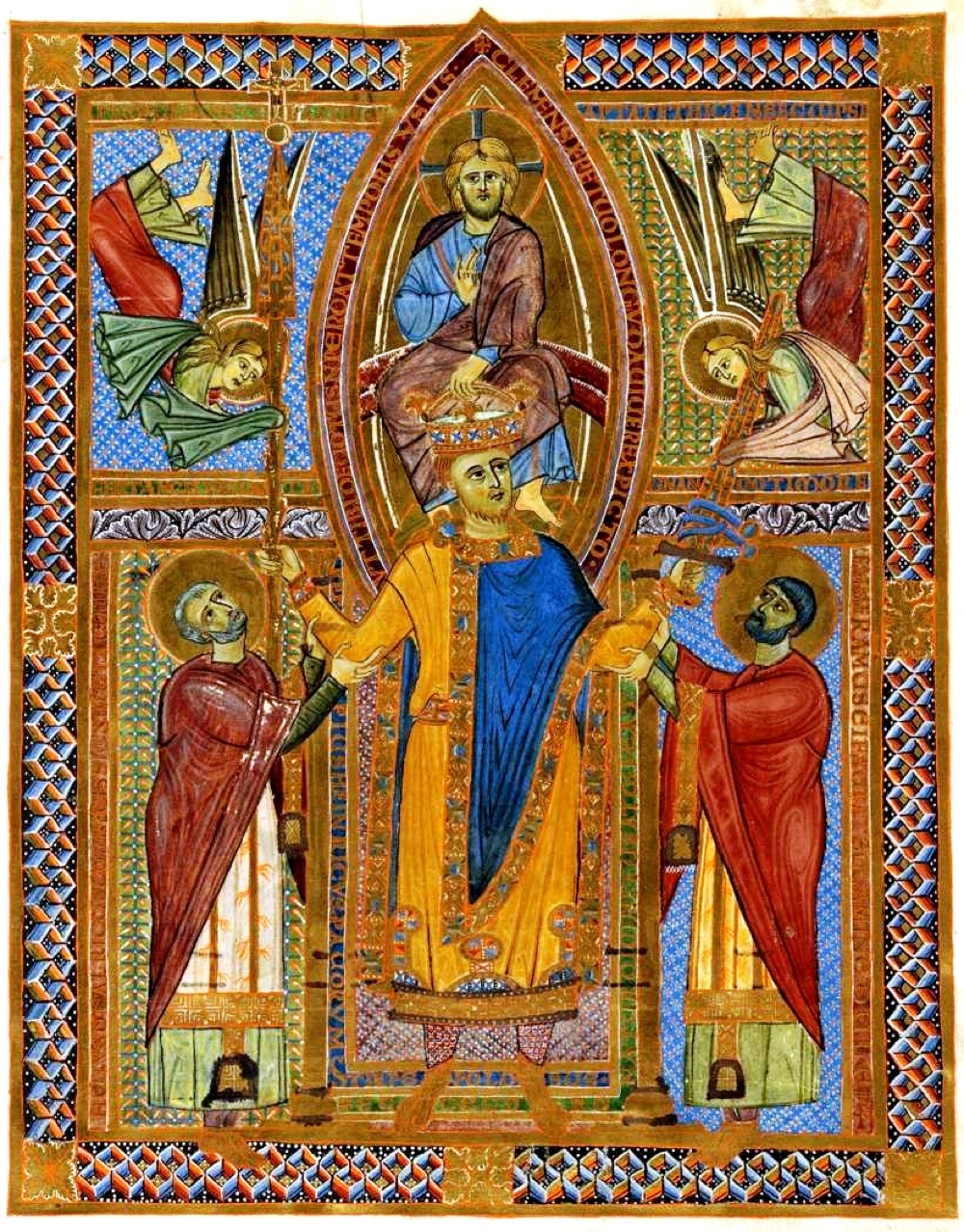
Henry II wore the crown of the Holy Roman Empire from 1014 until his death, yet the mark he left on the Church wasn't made with armies. In 1007, still only King of Germany, he carved a brand-new diocese out of his own family's lands at Bamberg and poured his personal wealth into it — a cathedral, schools, a community of canons trained to reform a clergy he thought had grown slack.
That instinct — treat the throne as something held in trust, not owned — ran through his whole reign. He backed the monastic reformers pushing for stricter discipline in an age when abbeys had become family property, and he used imperial muscle to put bishops back under real accountability rather than local lords. Tradition holds that his marriage to Cunegunda of Luxembourg was lived under a shared vow of chastity; the story is old and widely told, though it cannot be verified with certainty.
"The king's heart is a stream of water in the hand of the LORD; he turns it wherever he will." — Proverbs 21:1
Henry died in 1024 and was buried at Bamberg, the diocese he had built. Rome canonized him in 1146 — one of the few rulers the Church has ever named a saint, precisely because he seemed to grasp that a crown is borrowed, not kept.
Saint Henry, you governed as one who would answer for it: ask for us the grace to hold whatever authority we are given loosely, and for God alone.
Feastmail · General Roman Calendar
Feastmail, Dublin, Ireland
You're receiving this because you subscribed at Feastmail. Unsubscribe.